
1. Overview
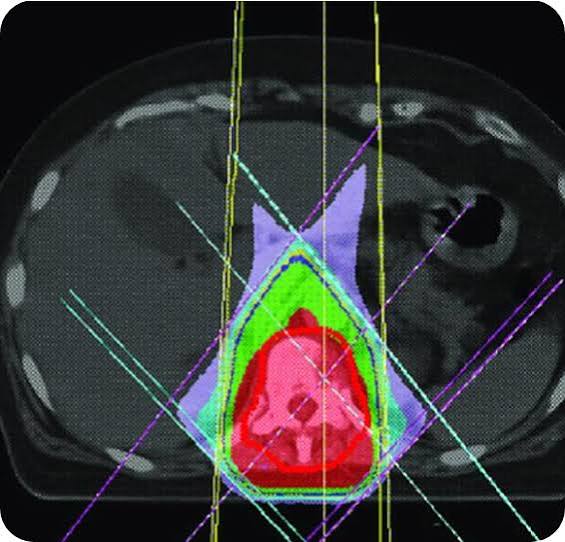
3D Conformal Radiation Therapy (3D-CRT) is a widely used form of external beam radiation therapy. It shapes the radiation beams to closely match the tumor’s three-dimensional shape.
Using detailed 3D images from CT scans, doctors design radiation beams that conform to the tumor from several different angles. This improves targeting compared to older 2D methods and helps reduce radiation to nearby healthy tissues.
While newer techniques like IMRT and VMAT have advanced further, 3D-CRT remains an important, effective, and accessible option for many patients.
Read also: How To Access Lutetium-177 Therapy at HCG CCK in Nairobi
2. Why is it done, and when is it chosen over other modalities
Doctors use 3D-CRT to deliver effective radiation while protecting surrounding healthy organs as much as possible.
Common reasons for 3D-CRT:
- Breast cancer
- Lung cancer
- Hodgkin’s lymphoma
- Some head and neck cancers
- Prostate cancer (in selected cases)
- Many other solid tumors
When 3D-CRT is chosen:
- When the tumor has a relatively simple shape
- When excellent outcomes can be achieved without the added complexity of IMRT/VMAT
- In centers with limited advanced technology
- When treatment time and cost are important considerations
- For certain palliative (symptom relief) treatments
Comparison with other modalities:
- Vs. Older 2D radiation: Much better tumor shaping and organ sparing.
- Vs. IMRT/VMAT: Less complex and faster to plan, but may deliver more radiation to nearby healthy tissues in complex cases.
- Vs. SBRT: Uses lower dose per session and more fractions (sessions) for larger areas.
3D-CRT is often selected when it can achieve good results without needing the highest level of dose sculpting.

3. Side effects of treatment
Side effects vary depending on the treatment area and total dose. 3D-CRT generally causes fewer side effects than older techniques.
Early side effects (during or shortly after treatment):
- Fatigue
- Skin redness or irritation in the treated area
- Site-specific symptoms:
- Temporary cough or swallowing discomfort (chest)
- Mild urinary or bowel changes (pelvis)
- Sore throat or dry mouth (head and neck)
Late side effects (months to years later):
- Skin changes or pigmentation
- Mild scarring or fibrosis
- Long-term changes in organ function (e.g., bowel, bladder, or lung)
- Rare risk of secondary cancers
The conformal shaping of 3D-CRT helps limit these effects. Your radiation team will provide supportive care to manage symptoms.

4. How to prepare before the treatment
Patient Segment
- Attend the simulation (planning) session
- Follow any preparation instructions (bladder filling, breathing technique, etc.)
- Maintain consistent daily routines to help with positioning
- Inform the team about any medical implants or conditions
- Ask questions about what to expect during daily treatments
Doctor / Medical Team Segment
- Perform a detailed CT simulation scan
- Outline the tumor and nearby critical organs in 3D
- Design custom radiation fields (beams) using planning software
- Verify the treatment plan with physics checks
- Create immobilization devices (masks, cradles, or foam molds)
- Combine with IGRT (image guidance) when available for better accuracy

5. What to expect
Before treatment
You will have a simulation visit where the team takes CT scans in the exact treatment position. Small skin marks or tattoos are placed for daily alignment. This session usually takes 30–60 minutes.
During treatment
- You lie on the treatment table in the same position each day.
- The machine delivers radiation from several fixed angles.
- You will not feel the radiation itself.
- Each daily session typically lasts 10 to 20 minutes.
Number of sessions: Most 3D-CRT courses involve 15 to 30 sessions, given once daily, five days a week, over 3 to 6 weeks.
After treatment
You can go home right after each session. Side effects may build gradually and usually improve in the weeks following treatment completion.
6. Expected results of the procedure
3D Conformal Radiation Therapy has a long track record of success across many cancer types.
- Good local tumor control when used for appropriate cases.
- Effective symptom relief in palliative treatments.
- Well-tolerated with generally manageable side effects.
- Strong outcomes for breast cancer, lymphoma, and many other tumors.
While newer techniques may offer advantages in complex cases, 3D Conformal Radiation Therapy (3D-CRT) continues to deliver reliable results for many patients. Outcomes depend on cancer type, stage, and individual health factors.
7. Call to Action
If you or a loved one is considering radiation therapy, 3D Conformal Radiation Therapy (3D-CRT) remains a proven and effective option.
Book an appointment with a radiation oncologist to discuss whether 3D Conformal Radiation Therapy (3D-CRT) or a more advanced technique is best suited to your needs.
For more personalized information and guidance, contact our radiation oncology team today. We are here to support you in making the right treatment decision.
Contact us: +254 737 844 882


