
1. Overview
Stereotactic Body Radiation Therapy (SBRT) is an advanced form of external beam radiation therapy. It delivers high doses of radiation to tumors with extreme accuracy while sparing nearby healthy tissues.
Doctors also call it SABR (Stereotactic Ablative Radiotherapy). Unlike traditional radiation, which spreads treatment over many weeks, SBRT completes treatment in just a few sessions, often 3 to 5.
It uses advanced imaging and computer planning to target tumors from many angles. The beams converge precisely on the cancer, giving a strong “ablative” (tumor-destroying) dose in each session. This makes SBRT especially useful for small, well-defined tumors.
SBRT is suitable for various body sites, including the lung, prostate, liver, pancreas, kidney, spine, and oligometastases (limited spread of cancer).
Read also: How Does Volumetric Modulated Arc Therapy Work?
2. Why is it done, and when is it chosen over other modalities
Doctors use Stereotactic Body Radiation Therapy mainly to achieve strong tumor control with minimal damage to surrounding organs.
Common reasons SBRT is chosen:
- Early-stage lung cancer in patients who cannot undergo surgery
- Localized prostate cancer (low to intermediate risk)
- Liver tumors or metastases
- Spinal tumors
- Oligometastatic disease (few metastases in limited areas)
- Re-treatment of previously irradiated areas (in selected cases)
When doctors prefer SBRT over other EBRT options:
- When the tumor is small and clearly visible on imaging
- When the patient wants fewer treatment visits
- When nearby critical organs need maximum protection
- When high precision can improve outcomes compared to standard radiation
Comparison with other modalities:
- Vs. Conventional EBRT or IMRT: SBRT uses higher doses per session but far fewer sessions (3–5 instead of 20–40). This offers convenience and potentially better tumor kill for certain cancers.
- Vs. Surgery: Good non-invasive alternative for patients who are not fit for operation or prefer to avoid surgery.
- Vs. Proton Therapy: SBRT is more widely available and often sufficient for many tumor locations.
Doctors select SBRT when the benefits of precision and shorter treatment time outweigh the need for broader coverage that other techniques provide.

3. Side effects of treatment
Like all radiation therapies, Stereotactic Body Radiation Therapy (SBRT) can cause side effects. These vary by treatment site. Most are manageable.
Early side effects (appear during or shortly after treatment):
- Fatigue
- Skin irritation or redness in the treated area
- Mild swelling or inflammation
- Site-specific issues, such as:
- Cough or shortness of breath (lung)
- Urinary frequency or discomfort (prostate)
- Nausea (abdominal sites)
These usually improve within a few weeks after treatment ends.
Late side effects (may appear months or years later):
- Scarring or fibrosis in treated tissues
- Changes in bowel or bladder function
- Rib pain or fracture (rare, especially in chest treatments)
- Nerve irritation or spinal issues (rare with proper planning)
- Secondary cancers (very low risk)
Modern planning and image guidance have significantly reduced severe side effects. Your radiation oncology team will discuss risks specific to your case.
4. How to prepare before the treatment
Patient Segment
- Attend all simulation and planning appointments
- Follow instructions about fasting or medications if needed
- Continue regular medications unless told otherwise
- Inform your team about any implants, pacemakers, or metal in your body
- Arrange transportation for treatment days (you can usually drive yourself, but some prefer help)
- Maintain good nutrition and light physical activity
- Ask questions and discuss concerns with your doctor
Doctor / Medical Team Segment
- Perform detailed imaging (CT, MRI, PET) for accurate tumor mapping
- Create a custom radiation plan using advanced software
- Use immobilization devices (molds, vacuum cushions, or body frames) to keep you still
- Place fiducial markers (tiny gold seeds) in some cases for better tracking
- Verify the plan with quality assurance checks
- Coordinate with your other specialists (surgeon, medical oncologist)
Good preparation ensures the radiation hits the target precisely.
5. What to expect
Before treatment
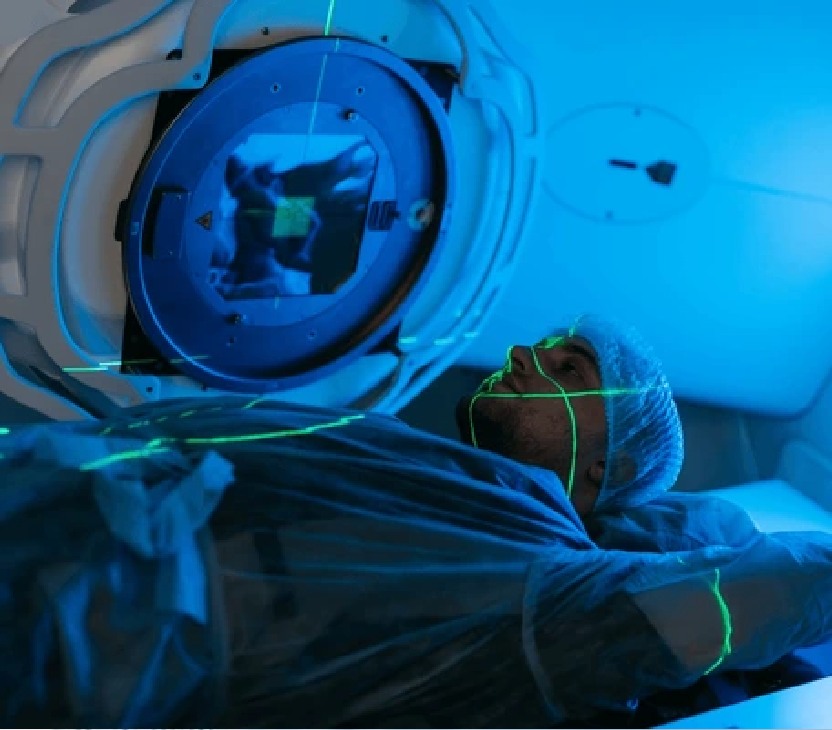
You will have a simulation session where the team takes detailed scans and creates custom positioning devices. This visit may take 1–2 hours. You may receive small tattoos or marks on your skin for daily alignment.
During treatment
Each SBRT session is similar to a regular radiation visit but more precise.
- You lie on the treatment table in the same position as simulation.
- The machine rotates around you to deliver beams from multiple angles.
- The team monitors you via cameras and can pause if needed.
- The actual radiation delivery usually takes 10 to 30 minutes per session.
- Total appointment time is typically 30–60 minutes.
Number of sessions: Most patients receive 3 to 5 treatments, given daily or every other day. The full course often finishes within 1–2 weeks.
After treatment
You can usually go home right away and resume normal activities. Some patients feel tired and rest more in the following days.
Follow-up appointments will monitor your response and manage any side effects.

6. Expected results of the procedure
Stereotactic Body Radiation Therapy often achieves excellent local tumor control.
- In early-stage lung cancer, control rates can exceed 85–90% at 2–3 years.
- For prostate cancer, studies show high disease control rates (around 95% at 5 years for low-intermediate risk cases) with convenient scheduling.
- Many patients experience tumor shrinkage or stabilization.
- Symptom relief is common when treating painful metastases.
Results vary by cancer type, tumor size, location, and your overall health. Stereotactic Body Radiation Therapy (SBRT) offers strong outcomes with the added benefit of shorter treatment time and good quality of life for suitable patients.
Long-term data continues to grow, but current evidence supports SBRT as an effective option in selected cases.
7. Call to Action
If you or a loved one has been diagnosed with cancer and is exploring treatment options, Stereotactic Body Radiation Therapy (SBRT) may be suitable.
Book an appointment with a radiation oncologist to discuss whether Stereotactic Body Radiation Therapy (SBRT) is right for your specific situation. Every case is unique, and a personalized consultation will provide the best guidance.
For more personalized information, contact our radiation oncology team today. Early discussion helps you make informed decisions about your care.